الاربعاء, 31 أغسطس, 2022
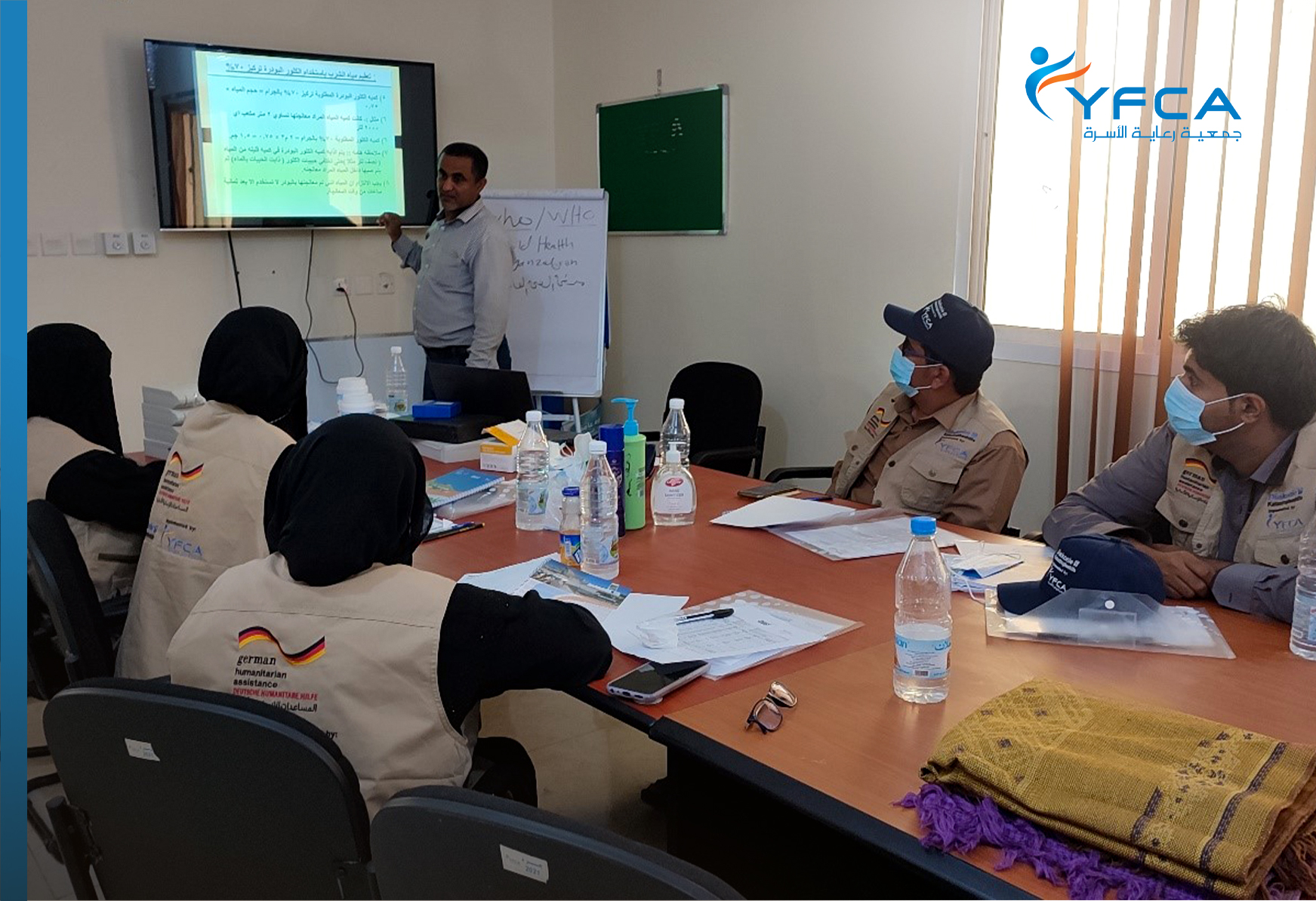
Yemen Family Care Association (YFCA) conducts a training course for five volunteers; three females and two males, on water quality surveillance in the Ataq district, Shabwah governorate.
The water quality surveillance volunteers were trained on various topics, including the following:
1. Introduction of the concepts of water quality
2. Introduction of Yemeni and WHO standards for drinking water
3. Explaining the physical, chemical, and biological properties of water
4. Correct methods for taking test samples for water
5. Analyzing the results of water tests
6. Explaining the sources of water contamination and how to handle them
7. How to use chlorine in sterilizing water
8. How to use the handheld tools used in the field
9. How to measure (TDS, Temperature, E.C, PH, Salinity) of water.
Within the project of WASH and humanitarian food assistance for IDPs, host communities, returnees, and marginalized groups in six districts of Shabwah Governorate-Yemen, which is funded by the German Federal Foreign Ministry (AA) in partnership with Diakonie Katastrophenhilfe (DKH).
This training aims to:
• Familiarize trainees with YFCA and its goals, project, objectives, type, targeted beneficiaries, and motives of intervention.
• Understanding the objectives and importance of water quality monitoring.
• Distinguishing between physical, chemical, and biological properties of water, and how these properties determine the quality of water.
• Understanding all the chemical elements involved in the formation of water and its effect on human health.
• Knowing the water treatment methods.
• Using the water tester Device (Smart Multi-Parameter Tester) correctly.
• Using the Water Tester Tool (Pooltester CL/PH) correctly.
• Calculating the amount of chlorine needed in disinfecting water.
The water quality surveillance volunteers were trained on various topics, including the following:
1. Introduction of the concepts of water quality
2. Introduction of Yemeni and WHO standards for drinking water
3. Explaining the physical, chemical, and biological properties of water
4. Correct methods for taking test samples for water
5. Analyzing the results of water tests
6. Explaining the sources of water contamination and how to handle them
7. How to use chlorine in sterilizing water
8. How to use the handheld tools used in the field
9. How to measure (TDS, Temperature, E.C, PH, Salinity) of water.
Within the project of WASH and humanitarian food assistance for IDPs, host communities, returnees, and marginalized groups in six districts of Shabwah Governorate-Yemen, which is funded by the German Federal Foreign Ministry (AA) in partnership with Diakonie Katastrophenhilfe (DKH).
This training aims to:
• Familiarize trainees with YFCA and its goals, project, objectives, type, targeted beneficiaries, and motives of intervention.
• Understanding the objectives and importance of water quality monitoring.
• Distinguishing between physical, chemical, and biological properties of water, and how these properties determine the quality of water.
• Understanding all the chemical elements involved in the formation of water and its effect on human health.
• Knowing the water treatment methods.
• Using the water tester Device (Smart Multi-Parameter Tester) correctly.
• Using the Water Tester Tool (Pooltester CL/PH) correctly.
• Calculating the amount of chlorine needed in disinfecting water.