Saturday, 16 May, 2026
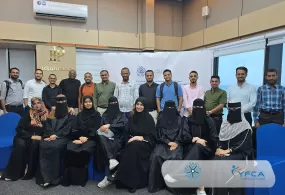
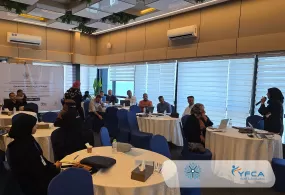
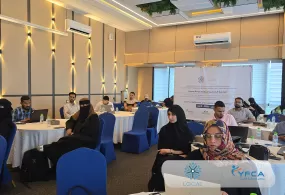
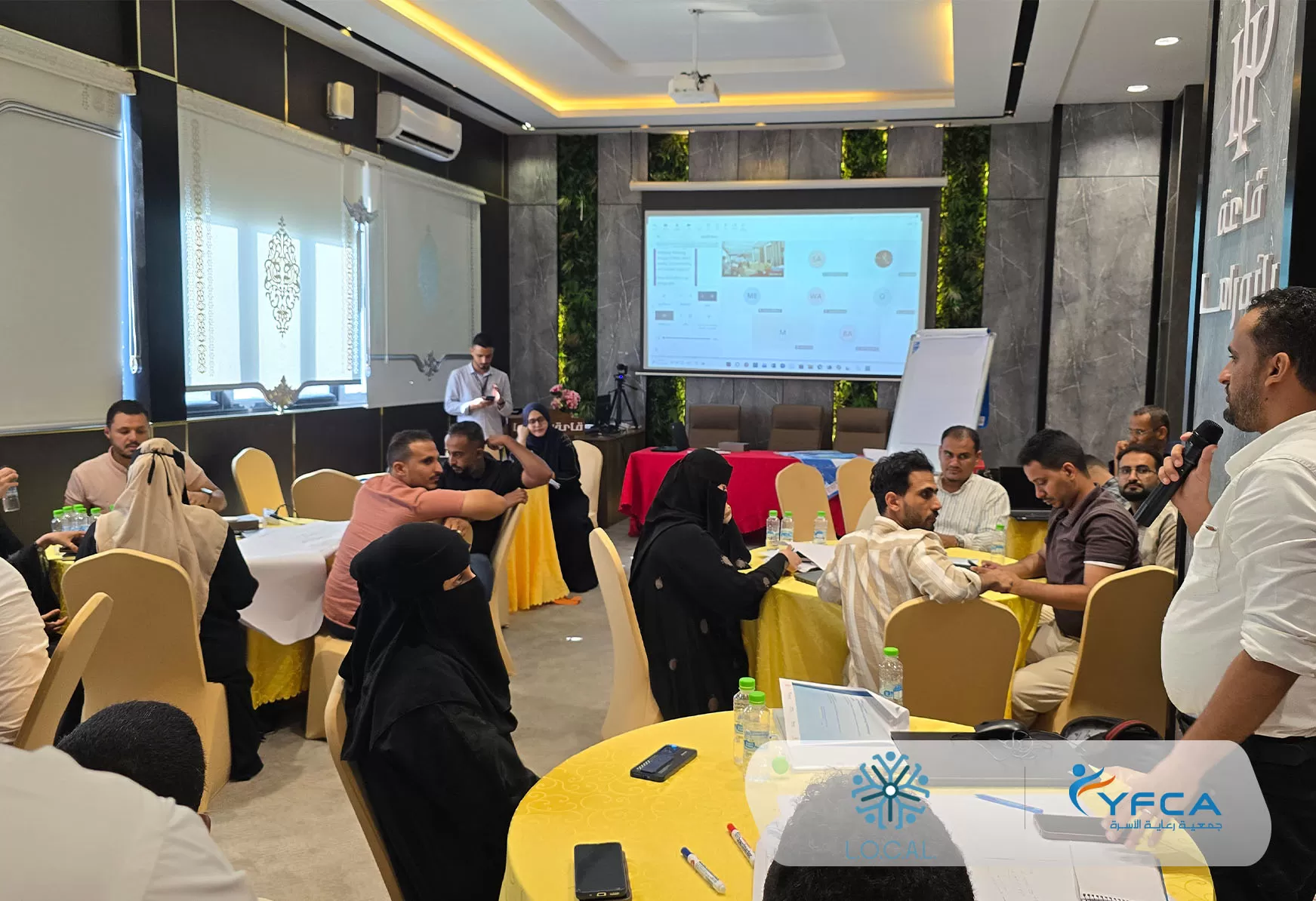
YFCA), as lead of the LOCAL-Lead Consortium (Localized Ownership for Coordination, Accountability and Leadership in Direct Funding), successfully concluded the pioneering pilot project by hosting the Final Reflection, Learning and Strategic Influence Workshop in Aden.
The two-day workshop brought together representatives from consortium partners—including Nahda Makers Organization (NMO), Sustainable Development Foundation (SDF), Mawaddah Foundation, and CARE Nederland—alongside members of the Yemen Joint Response (YJR) consortium and other humanitarian stakeholders to reflect on the project's achievements, validate key lessons learned, and explore pathways for strengthening locally led humanitarian action in Yemen and beyond.
Supported by the Dutch Relief Alliance (DRA) under its Towards Direct Funding (TDF) initiative, the LOCAL-Lead pilot was designed to demonstrate that local organizations can successfully lead humanitarian consortia, manage direct funding, share decision-making authority, strengthen collective accountability, and coordinate emergency response through locally governed systems.
Rather than serving solely as a project closing event, the workshop represented the culmination of a collective learning journey. Participants reviewed the consortium's experience in piloting innovative approaches to shared governance, distributed leadership, adaptive learning, institutional capacity strengthening, risk sharing, and crisis response, while examining how these experiences can inform future humanitarian partnerships and localization policies.
Throughout the discussions, participants reaffirmed that meaningful localization extends beyond implementation responsibilities. It requires local organizations to exercise genuine leadership over strategic decision-making, governance, resource allocation, and accountability. The workshop demonstrated that when supported by equitable partnerships, appropriate governance structures, and mutual trust, locally led consortia can effectively manage complex humanitarian programs while maintaining high standards of quality, transparency, and compliance.
Participants also reflected on several of the project's key innovations, including:
The two-day workshop brought together representatives from consortium partners—including Nahda Makers Organization (NMO), Sustainable Development Foundation (SDF), Mawaddah Foundation, and CARE Nederland—alongside members of the Yemen Joint Response (YJR) consortium and other humanitarian stakeholders to reflect on the project's achievements, validate key lessons learned, and explore pathways for strengthening locally led humanitarian action in Yemen and beyond.
Supported by the Dutch Relief Alliance (DRA) under its Towards Direct Funding (TDF) initiative, the LOCAL-Lead pilot was designed to demonstrate that local organizations can successfully lead humanitarian consortia, manage direct funding, share decision-making authority, strengthen collective accountability, and coordinate emergency response through locally governed systems.
Rather than serving solely as a project closing event, the workshop represented the culmination of a collective learning journey. Participants reviewed the consortium's experience in piloting innovative approaches to shared governance, distributed leadership, adaptive learning, institutional capacity strengthening, risk sharing, and crisis response, while examining how these experiences can inform future humanitarian partnerships and localization policies.
Throughout the discussions, participants reaffirmed that meaningful localization extends beyond implementation responsibilities. It requires local organizations to exercise genuine leadership over strategic decision-making, governance, resource allocation, and accountability. The workshop demonstrated that when supported by equitable partnerships, appropriate governance structures, and mutual trust, locally led consortia can effectively manage complex humanitarian programs while maintaining high standards of quality, transparency, and compliance.
Participants also reflected on several of the project's key innovations, including:
- A shared governance model that redistributed leadership and decision-making across consortium partners;
- Technical Working Groups (TWGs) that embedded learning, risk sharing, and institutional strengthening into day-to-day management;
- A Risk Sharing Framework that shifted partnerships from traditional risk transfer towards collective responsibility and accountability;
- A Rapid Response Task Force (RRTF) and Crisis Modifier mechanism that demonstrated how locally led emergency governance can combine agility with accountability;
- Practical approaches to adaptive management, peer learning, and evidence-based decision-making, strengthening both implementation quality and institutional resilience.
The workshop concluded that the LOCAL-Lead experience provides practical evidence that locally led governance and direct funding mechanisms are not only feasible but can strengthen ownership, responsiveness, collaboration, and sustainability across humanitarian partnerships. Participants emphasized that the project's greatest contribution lies not only in what it achieved during implementation, but in its potential to influence future humanitarian policy, partnership models, and funding approaches that place local actors at the centre of decision-making.
Looking ahead, consortium members expressed their commitment to sustaining the systems, partnerships, and knowledge generated through the pilot, while continuing to advocate for equitable partnerships, greater direct funding to local organizations, and humanitarian architectures that recognize local leadership as a cornerstone of effective and accountable humanitarian action.
Through the successful implementation of the LOCAL-Lead pilot, YFCA reaffirms its commitment to advancing localization, strengthening national leadership, promoting equitable partnerships, and contributing to a more inclusive, resilient, and accountable humanitarian system led by local organizations.
Looking ahead, consortium members expressed their commitment to sustaining the systems, partnerships, and knowledge generated through the pilot, while continuing to advocate for equitable partnerships, greater direct funding to local organizations, and humanitarian architectures that recognize local leadership as a cornerstone of effective and accountable humanitarian action.
Through the successful implementation of the LOCAL-Lead pilot, YFCA reaffirms its commitment to advancing localization, strengthening national leadership, promoting equitable partnerships, and contributing to a more inclusive, resilient, and accountable humanitarian system led by local organizations.