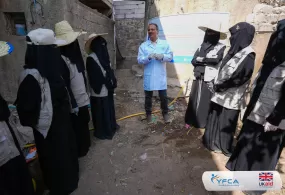
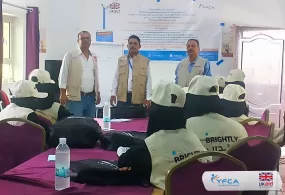
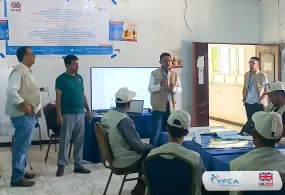
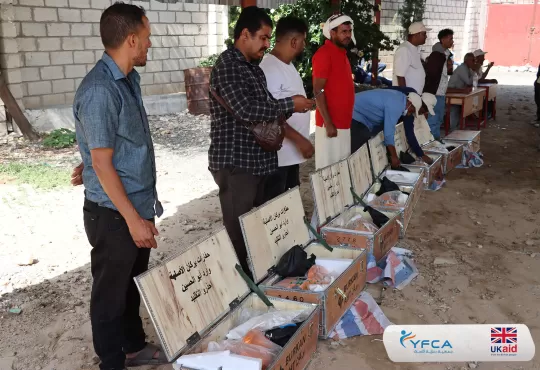
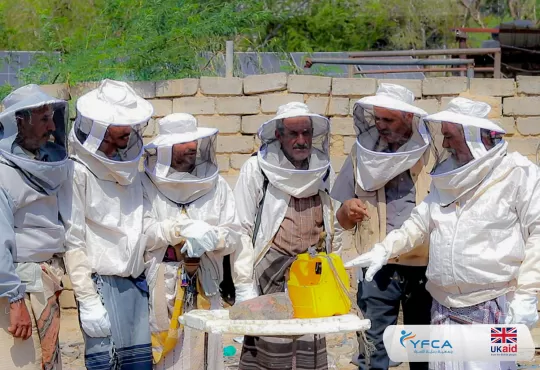
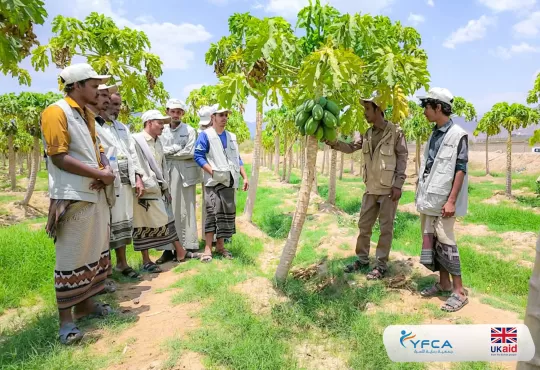
As part of efforts to strengthen livelihoods and help vulnerable households build more sustainable sources of income in Al-Dhale’e and Shabwah Governorates, 123 beneficiaries have received specialized training in livestock production and management, as part of the agricultural livelihoods component of the Building Resilience through Integrated Community-Based and Humanitarian Systems Transformation and Leadership in Yemen (BRIGHTLY) Project, funded by the UK, Foreign, Commonwealth & Development Office (FCDO).
focusing on good livestock practices, animal health, product quality, and improved marketing and business skills.
The training combined classroom learning with hands-on practice, helping participants move beyond traditional livestock practices toward more efficient and sustainable approaches to managing their animals and livelihoods.
Across eight days, participants explored key areas of livestock management, including animal selection, suitable housing, balanced nutrition, fodder production, herd management, disease prevention and biosecurity. The sessions also covered animal reproduction, newborn care, basic veterinary practices, and measures to improve the quality and safety of animal products.
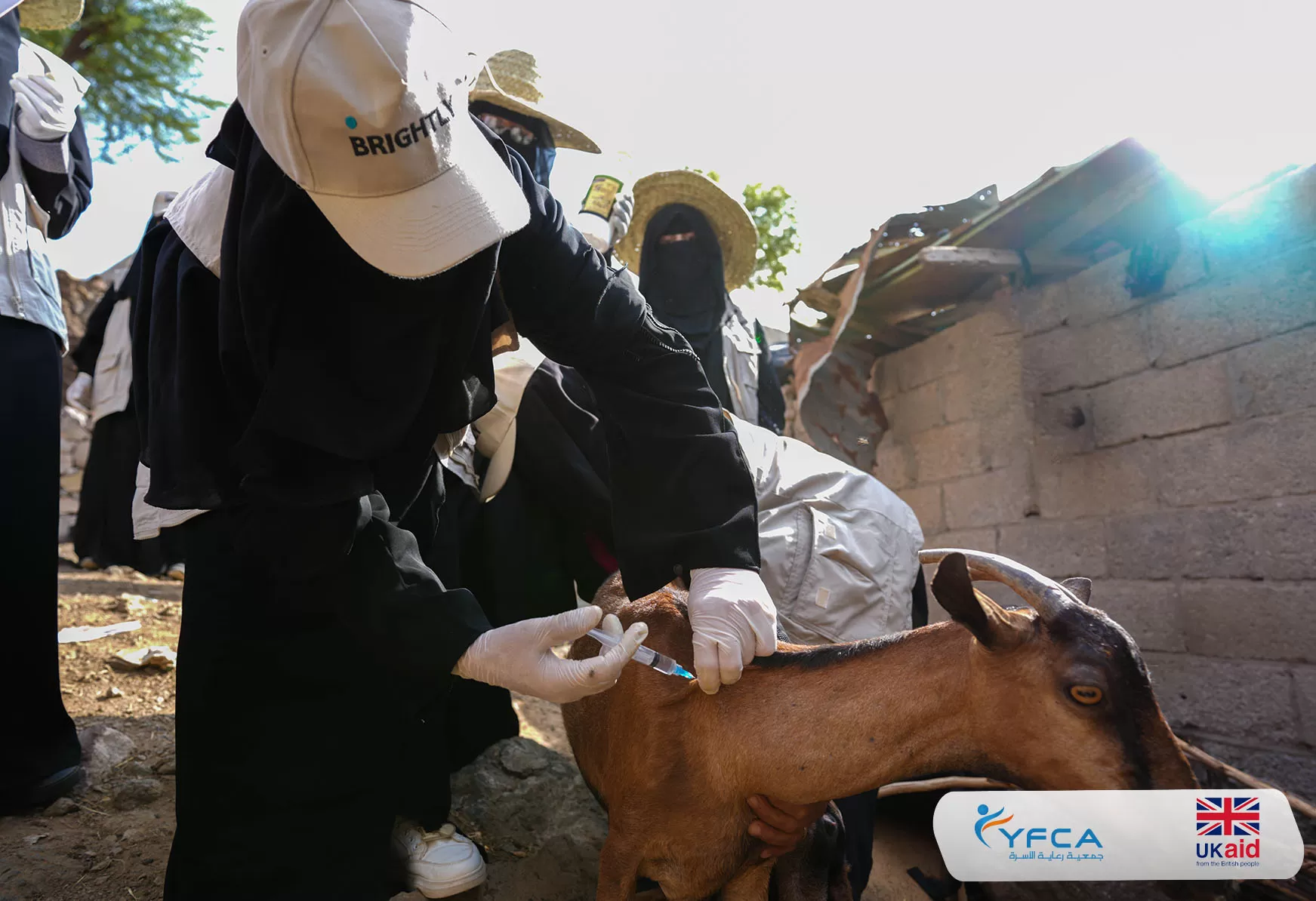
The practical component allowed participants to put their learning into action. They practiced assessing livestock housing conditions, handling animals safely, evaluating animal health and body condition, preparing and providing feed, maintaining hygiene, and applying basic animal care procedures.
The training also looked beyond production to help participants manage livestock as an income-generating activity. Participants learned how to maintain records, track production, births, treatments, costs and revenues, assess profitability, manage cash flow, and plan for the sustainable growth of their activities.
Marketing was another key component. Participants explored how to identify suitable markets, choose the right time to sell, maintain product quality, negotiate with buyers, and benefit from collective marketing opportunities through cooperatives and local structures.
This integrated approach recognizes that strengthening livelihoods goes beyond providing assets or financial support. It also requires the knowledge, practical skills and business capacity needed to manage those resources effectively.
By investing in the skills of 123 beneficiaries, the training aims to help households improve productivity, reduce losses, enhance the quality of their livestock products, and strengthen their ability to access markets and generate more sustainable income.
Friday, 28 August, 2026